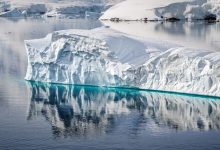
A decade-long global glacier-speed map reveals that meltwater makes glaciers flow faster in summer and slower in winter.
Global glacier-speed map shows meltwater hastening ice flow and signaling rising seas worldwide by 2100
Click Here to Add Gadgets360 As A Trusted Source

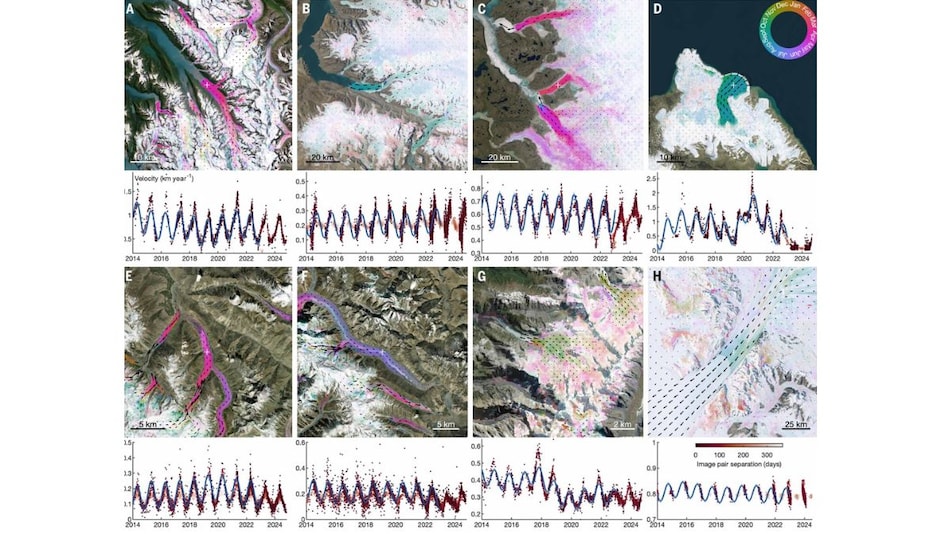
Global glaciers cover roughly 700,000 km² and hold about 70% of Earth’s freshwater.int. In recent years, they have lost ice at record rates (five of the last six years were record losses). A new study has created the first global map of glacier speeds, revealing that glaciers run faster in summer and slower in winter. Seasonal cycles driven by meltwater hint at how a warming climate will accelerate ice flow.
Seasonal glacier dynamics
According to the study, scientists at NASA’s Jet Propulsion Laboratory compiled nearly a decade of satellite data (over 36 million images) to map glacier speeds worldwide. They compared repeated photos of glaciers larger than roughly 5 km² to chart seasonal motion.
The results confirm a simple pattern: summer warmth boosts flow, winter cold slows it. In summer, meltwater penetrates to the glacier base and “acts like a lubricant,” reducing friction so the ice surges faster. Cooler temperatures then bring slower movement.
Future ice loss and sea-level rise
Researchers further indicate that significant seasonal variations are in many cases a signal of eventual long-term increase of speed: glaciers that have larger differences between summer and winter speeds are those which will accelerate more each year. According to the latest data, the cumulative ice loss of glaciers is estimated to be around 6,500 billion tons (≈273 billion tons per year) since 2000, which has led the global sea levels to rise by approximately 18 mm.
At present, glacier melting is the major cause of sea-level rise after ocean warming. Also, seasonal movement monitoring is a means of determining the glaciers that will become the largest sources of melting in the future.