New studies show that expanding Antarctic water after the last Ice Age disrupted deep-ocean stratification.
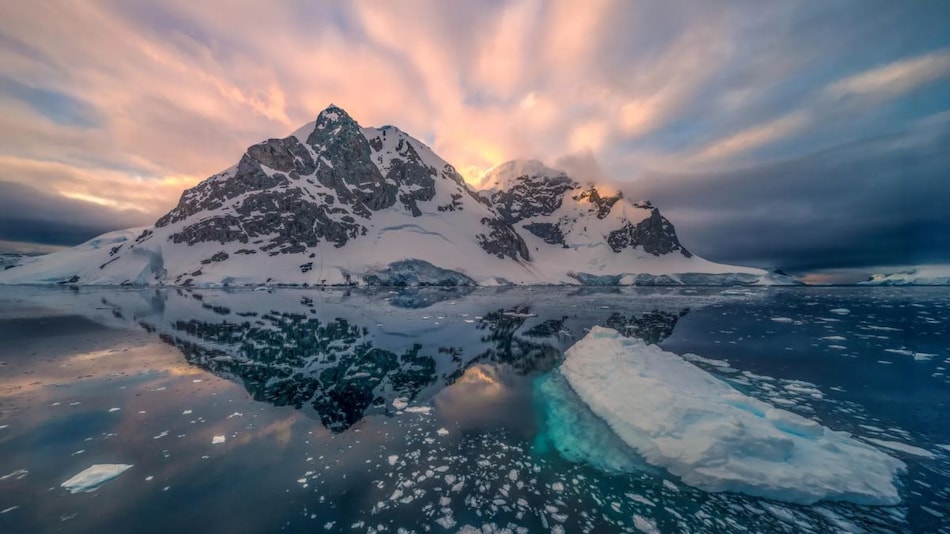
The Southern Ocean surrounding Antarctica plays a vital role in the global climate
Click Here to Add Gadgets360 As A Trusted Source

With the termination of the last Ice Age some 12,000 years ago, a drastic change of deep ocean circulation in Antarctica is evident to have emitted immense deep ocean carbon in the atmosphere, contributing towards warming the early Holocene. Recent studies demonstrate that with the growth of Antarctic Bottom Water (AABW), it has replaced ancient carbon-rich waters, which led to a carbon release that was buried long ago.
How Antarctic circulation unlocked stored carbon
As per a recent study published in the Natur journal, scientists examined nine sediment cores from the Southern Ocean, at depths of 2,200 to 5,000 meters across both Atlantic and Indian sectors. By measuring isotopic ratios of the trace metal neodymium — a reliable marker of water-mass origins — they reconstructed how water circulation changed over 32,000 years. During the Ice Age, deep ocean waters remained largely motionless, isolating carbon-rich water masses that had accumulated for millennia.
As ice melted and warming began roughly 18,000–10,000 years ago, AABW expanded in two major phases. This expansion disrupted stratification, allowed deep waters to mix upward, and released their stored carbon dioxide into the atmosphere — a mechanism previously underappreciated compared with northern-hemisphere circulation changes.
What this means for today’s warming world
Recent work on the Southern Ocean shows that freshening of surface waters — from melting ice and rainfall — has temporarily helped trap CO₂ in the deep ocean. But such stratification could fail if warming and stronger winds increase mixing, potentially releasing stored carbon in the future. The new findings highlight that shifts in Antarctic-driven ocean circulation remain a critical wildcard in Earth’s carbon balance — and reinforce the urgent need to monitor polar changes as the climate warms.