NIST physicists report that clocks on Mars tick 477 microseconds faster per day due to weaker gravity and orbital effects.
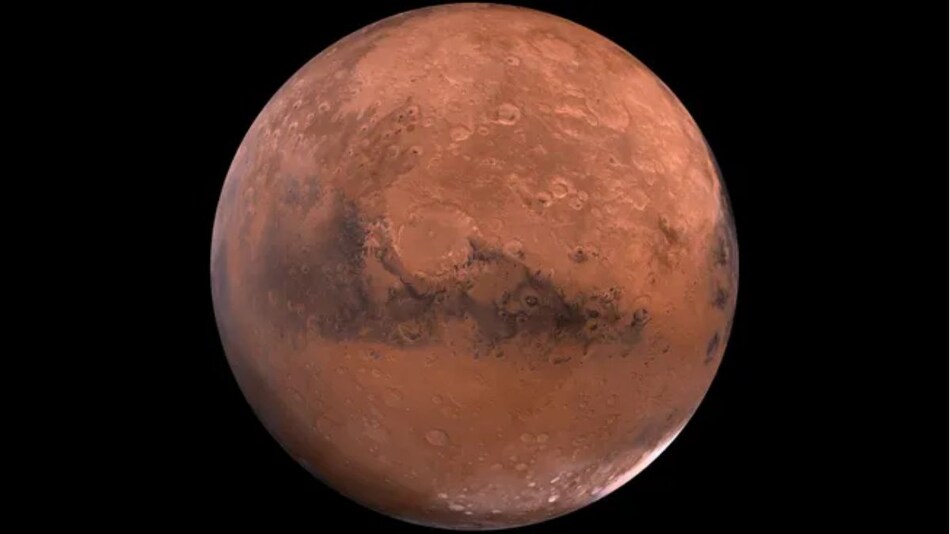
Mars is racing through time 477 microseconds per day, on average, faster than Earth
Click Here to Add Gadgets360 As A Trusted Source

Recent research shows time literally races on Mars: clocks on the Red Planet tick roughly 477 microseconds per day faster than those on Earth. NIST physicists attribute this to Mars’s weaker gravity and orbital factors, as predicted by Einstein’s theory of general relativity. Though only a fraction of a second each day, the small time shift will matter as space agencies plan precise navigation and communication systems across the solar system.
Why Mars’s clocks tick faster
According to a study by NIST physicists Neil Ashby and Bijunath R. Patla, clocks on Mars would run, on average, 477 microseconds per day faster than identical clocks on Earth, according to this research. This work takes into consideration the weaker surface gravity of Mars, its orbital eccentricity, and even gravitational tugs from the rest of the solar system. Nevertheless, because of its elliptical orbit, the deviation in time would exhibit variations in as much as ±226 microseconds per day, depending on its position along the orbit.
Implications for Mars exploration
A few hundred microseconds of drift can affect space navigation. Mission engineers must correct for Mars’s roughly 477 microseconds a day clock lead and synchronise Earth–Mars systems (accounting for light-travel delay). Earth’s 5G networks require timing accuracy to a tenth of a microsecond, and future space systems will need comparable precision.
Understanding Mars’s clock offset is a step toward reliable GPS-style navigation on the Red Planet. Scientists warn that ignoring these relativistic offsets could disrupt future Martian navigation and communication. As Patla notes, knowing Mars’s time difference will help synchronise networks for future Mars missions.